
Flex lines up $2 billion for Axiom’s AI power plans
Bottom lineThe proposed preferred investment would help fund EPC Power and prepare Axiom for separation. Its technology significance lies in how power conversion could fit a broader infrastructure portfolio.
The new agreement
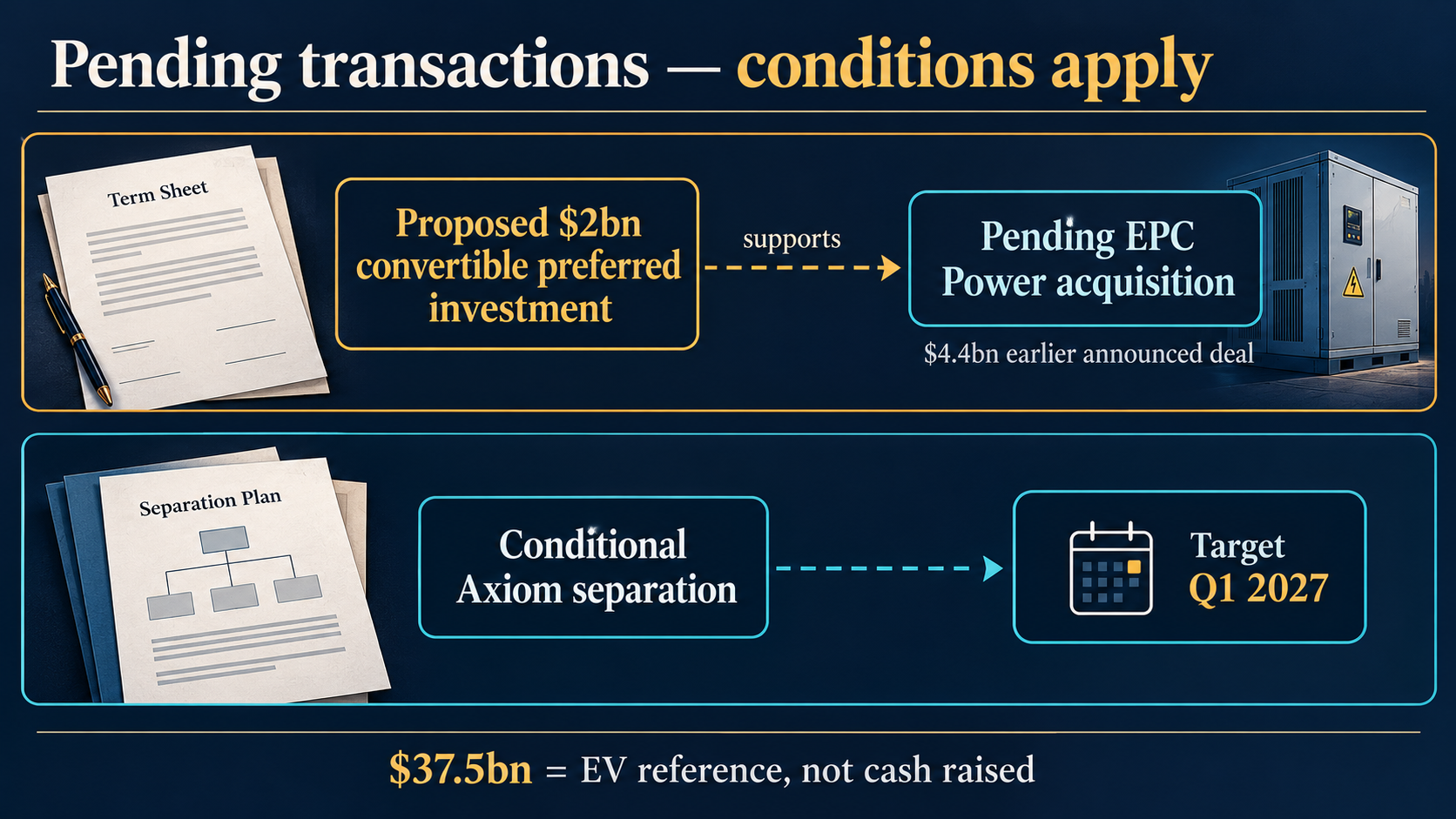
Flex announced an agreement on October 5 to sell $2 billion of convertible preferred shares in Axiom, its Cloud and Power Infrastructure business, to investors including funds affiliated with General Catalyst and Koch Equity Development. The investment remains subject to regulatory approvals and other closing conditions.
The company says proceeds would help fund its pending EPC Power acquisition and other permitted uses. Flex intends to separate Axiom into an independent public company in the first quarter of 2027, also subject to conditions. The announced $37.5 billion initial enterprise value is a transaction valuation reference; the proposed investment itself is $2 billion.
The technology behind the financing · Earlier context
In a separate September 3 announcement, Flex agreed to acquire EPC Power for $4.4 billion, subject to customary adjustments. That earlier deal was expected to close in the fourth quarter of 2026. It provides the background for the new financing announcement, rather than a second acquisition announced this week.
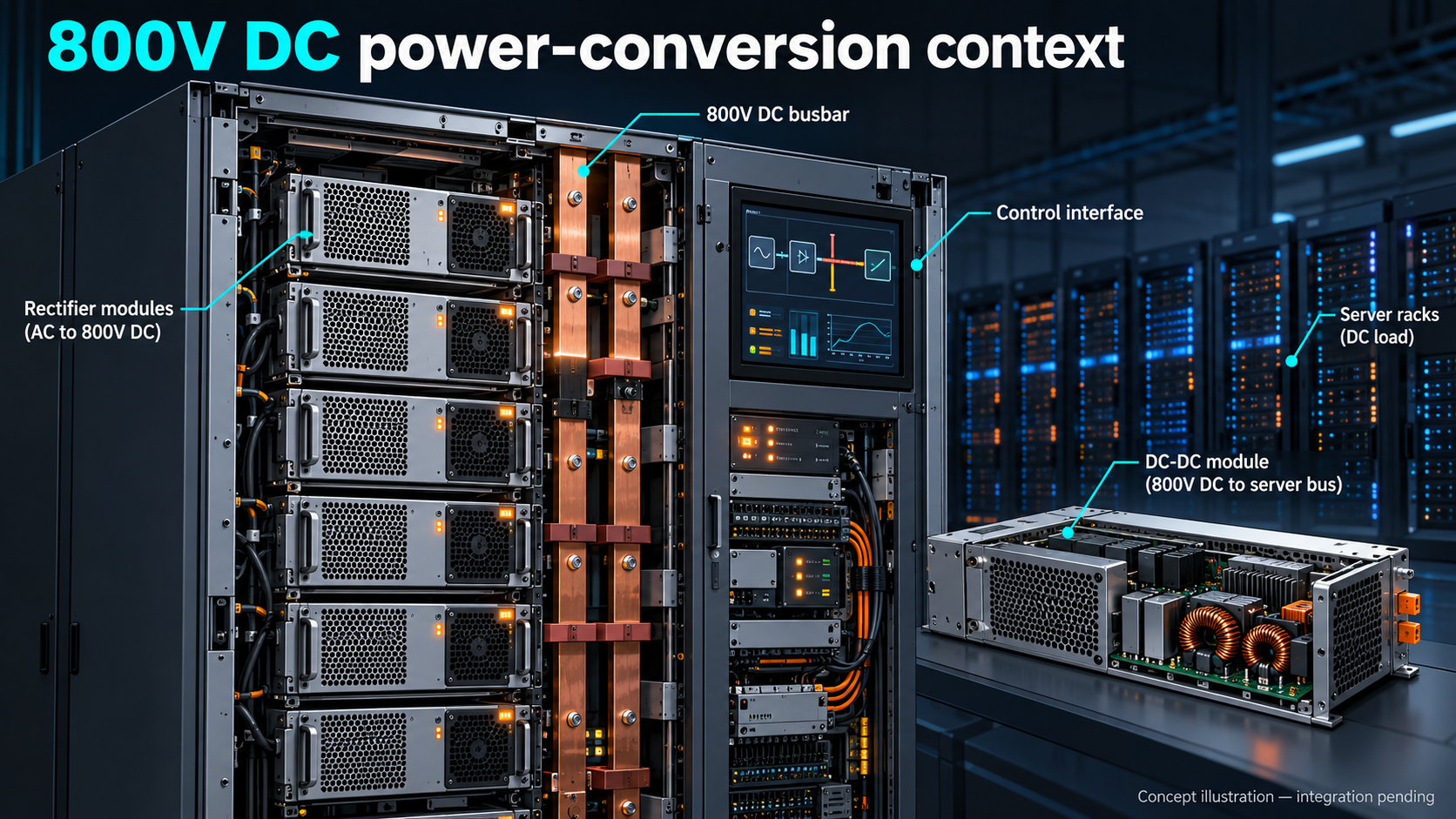
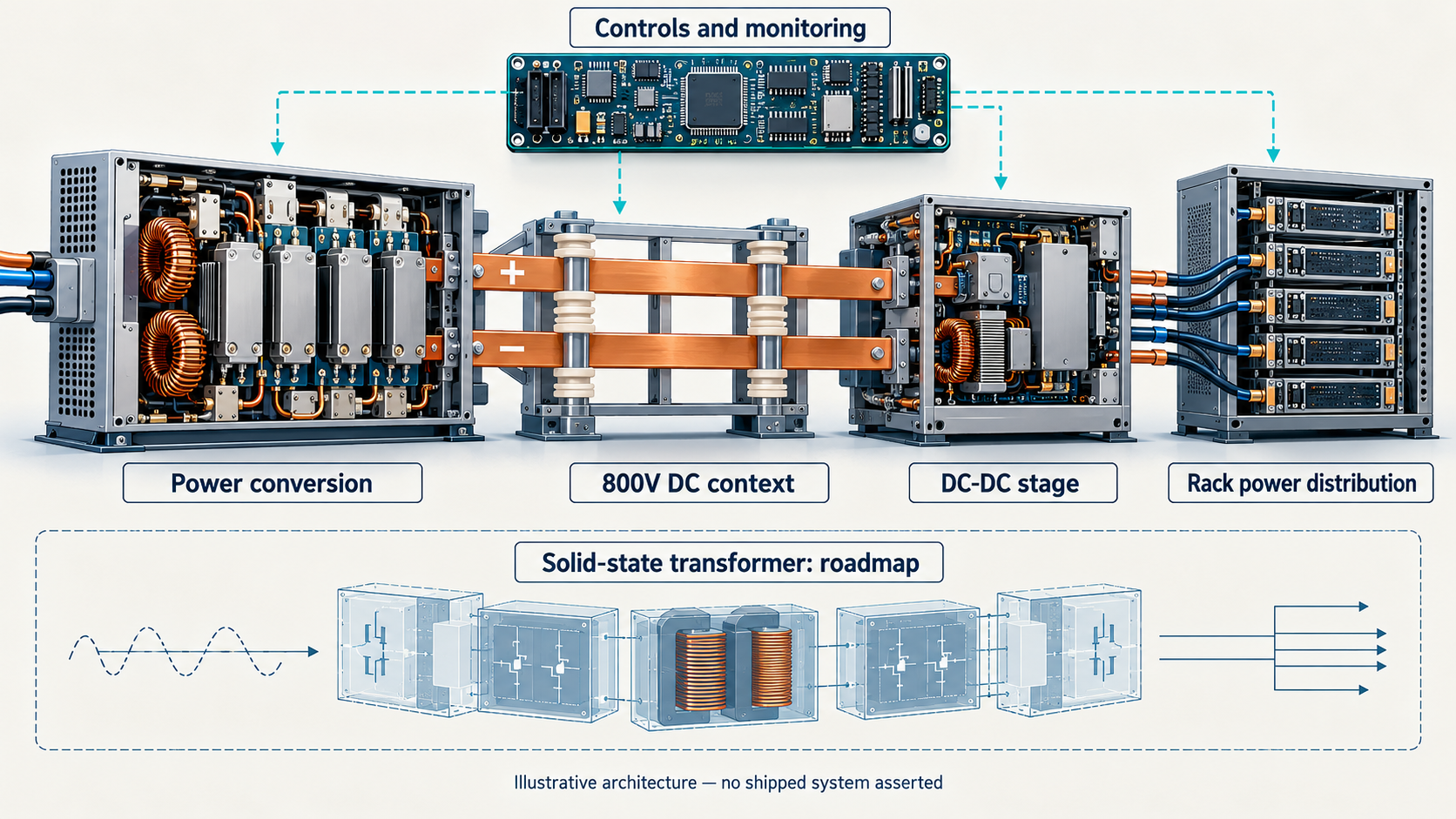
Flex describes EPC Power’s platform as combining hardware, software and controls for power conversion, including rectifiers and DC-DC conversion for 800V data center architectures. Solid-state transformers are on the development roadmap. Flex’s stated aim is to combine those capabilities with its existing power, cooling and compute portfolio.
FUVISIGHT analysis
For a technology buyer, the central question is whether a broader supplier portfolio can simplify the design and operation of a facility. If power conversion, cooling and rack integration are engineered together successfully, customers could have fewer interfaces to coordinate. That possibility still needs evidence from delivered systems.
An integrated offering would need to work across changing loads, maintenance events and equipment failures. Useful evidence could include efficiency across an operating range, recovery behavior, service requirements and compatibility with the rest of a customer’s installation. A peak specification alone would leave much of that operational picture unresolved.
The financing agreement is therefore one step in a longer chain. Funding, acquisition integration, product validation and customer deployment each have their own milestones. Treating them separately makes it easier to see what the announcement establishes today and what still depends on execution. It also avoids assuming that access to capital immediately creates usable data center capacity.
What to watch
The next checkpoints are confirmation that the preferred investment and EPC Power acquisition have closed, updates to the separation timetable, and evidence of integrated products reaching customers. For builders, independently interpretable performance and service data would be especially useful.